Choosing a custom hat manufacturer is a sourcing decision, not simply a search for the lowest unit price. Brands, wholesalers and importers need evidence that a supplier can translate artwork into an approved sample, produce repeatable quality, communicate clearly and deliver under agreed terms.
Quick answer: Compare manufacturers using a written specification, relevant product samples, a transparent quotation, clear quality-control checkpoints and an agreed production schedule. Confirm whether you are working with a factory, trading company or hybrid business rather than assuming the website’s label proves its role.
1. Define what you need before contacting suppliers
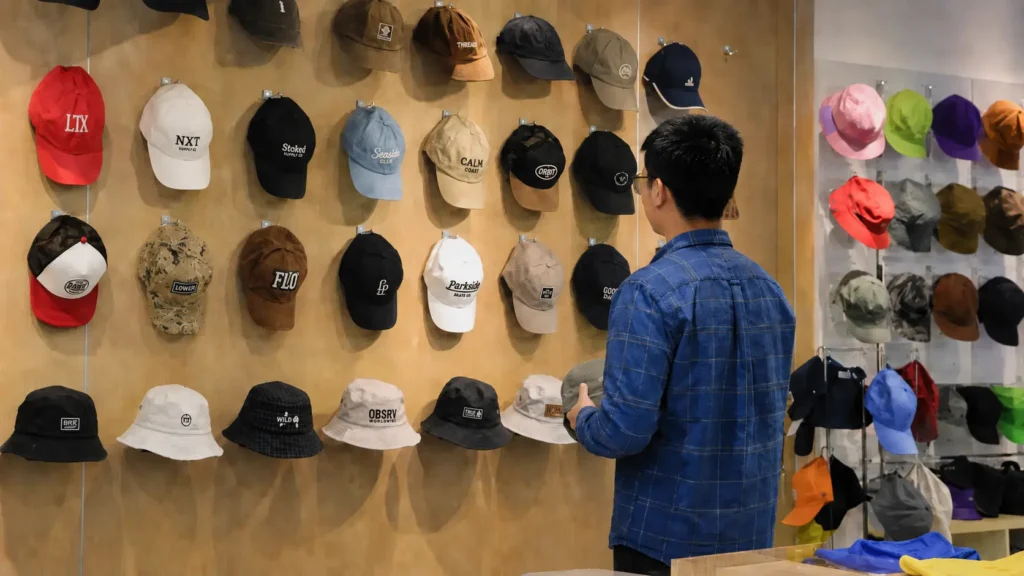
Prepare a concise RFQ with intended wearer, target market, preferred hat style, fabric, logo method, colorways, quantities, packing requirements, destination and target delivery date. State which details are fixed and which are negotiable. If you can share a reference sample, add measurements and photos alongside the original artwork.
Browse custom hat product categories or custom manufacturing services to understand the questions you may need to answer.
2. Verify supplier fit, not just the label on the website
A supplier may specialize in a narrow range of cap profiles or decoration techniques. Ask whether the proposed material, construction and logo method can be sampled with your actual design. If you require private labels, retail-ready packaging or shipment to multiple destinations, include those requirements from the start.
| What to ask | Why it matters | Useful evidence |
|---|---|---|
| Which hat styles do you make regularly? | Relevant expertise can reduce unexpected sampling changes | Product-specific samples and detailed specifications |
| Who handles production and quality checks? | Clarifies responsibilities and escalation | Process explanation and inspection checkpoints |
| Can you produce a pre-production sample? | Tests fit, fabric and logo on the actual design | Physical sample and signed-off specifications |
| What is your MOQ by variant? | MOQ may differ by material, color or decoration | Written quantity breakouts |
| What is included in the price? | Unit price alone does not show landed cost | Quotation with inclusions and trade terms |
| How are delays and defects handled? | Makes post-approval expectations explicit | Written approval, inspection and resolution process |
3. Request sample evidence relevant to your design
A convincing sample is not a generic catalog image. Compare shape and fit, logo placement, stitch finish, color matching, closure hardware, labels and packaging. Ask which elements are from an existing sample and which will be built specifically for your project. If a design includes very small lettering or specialty fabric, request proof that the decoration works on the chosen panel.
4. Compare embroidery, patches and printing with examples
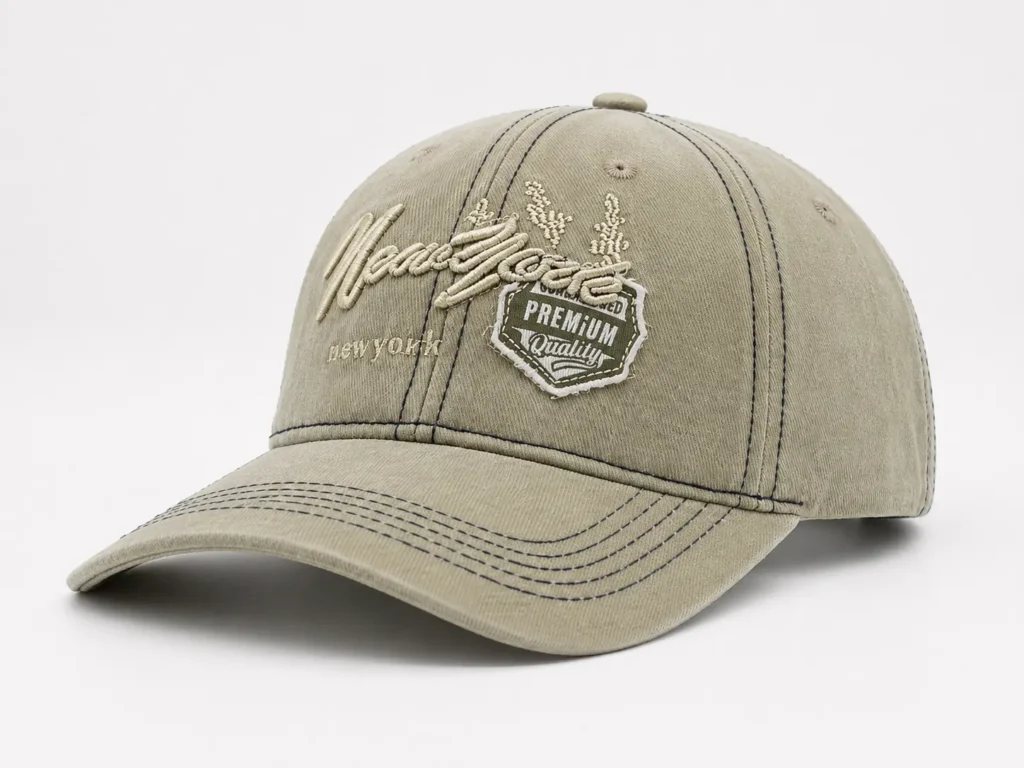
Different branding techniques suit different visual effects, materials and budgets. Ask for samples using your logo rather than choosing from generic photos. Pay attention to small type, edge detail, raised texture, adhesion and durability in the intended use.
| Technique | Useful for | Questions to ask |
|---|---|---|
| Flat embroidery | Stitched logos and lettering | Can the smallest letter and stitch details be reproduced? |
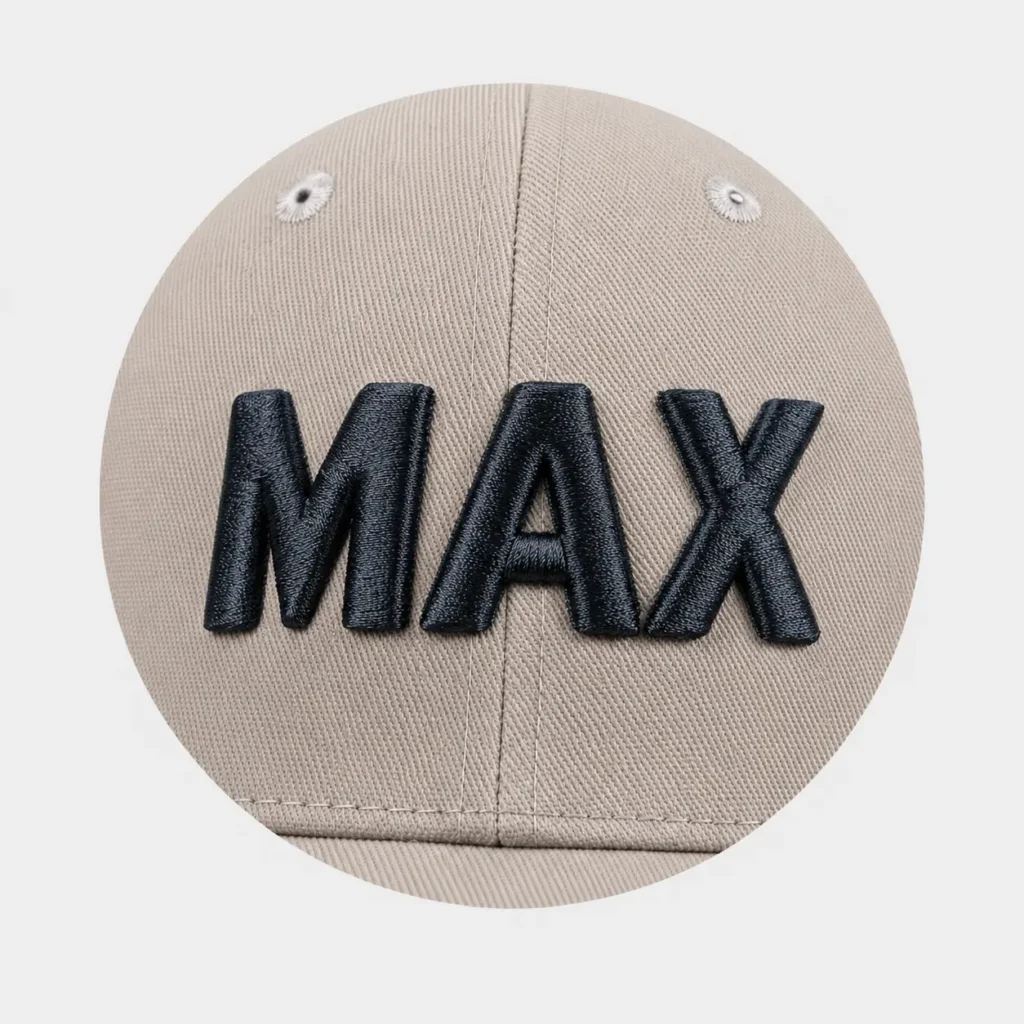
| 3D embroidery | Bold raised motifs | Are edges and raised sections clean after sampling? |
| Woven or applied patch | An applied badge appearance, potentially fine detail | How is the patch attached, and how does it wear? |
| Printing / transfer | Graphics that are not well suited to dense stitching | How does the result feel and hold up on this material? |
You can compare options on the baseball cap and trucker hat product pages.
5. Ask how the quotation is constructed
Request the unit price, currency, MOQ scope, decoration or setup fees, sampling cost, packaging, estimated freight and applicable trade terms. Ask whether the quote assumes one design and one color or allows mixed variants. A cheaper headline figure can exclude work that another supplier has included.
- Request itemized pricing for each design and color breakdown.
- Confirm whether the sample fee is separate from bulk pricing.
- Clarify packaging, labeling and shipping charges.
- Ask whether changes after sample approval require revised pricing.
6. Map the actual manufacturing and quality-control process
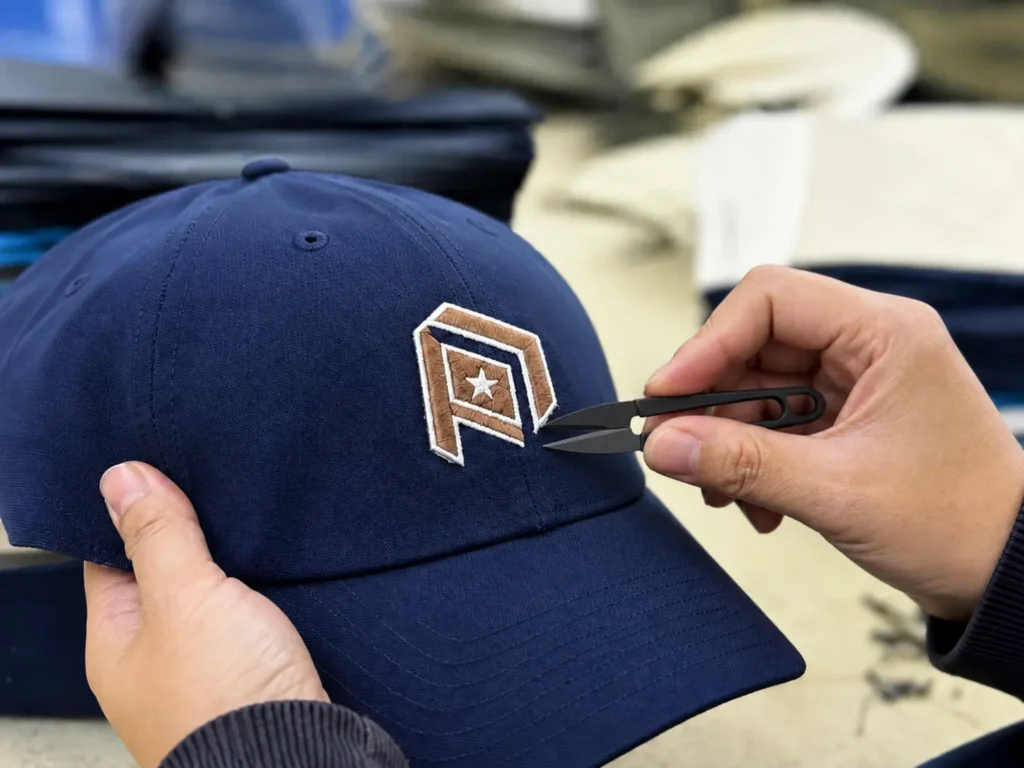
Check which stages require buyer approval: artwork, fabric or color reference, physical sample, pre-production setup, final inspection and shipment release. Agree how defects are defined, which tolerances matter and what supporting evidence will be available. Written checkpoints are particularly useful for repeat orders or multiple branded variants.
7. Verify compliance claims in context
If a supplier mentions sustainability certifications, social audits or fabric standards, request the current document and verify the organization named on it, validity period, products or facilities covered and whether the exact supplied materials fall within scope. A logo on a website is not proof that every product is certified. Avoid passing on certification claims to your own customers until verified.
8. Discuss communication and change management
A strong supplier should be able to flag unclear specifications, summarize design revisions, explain trade-offs and confirm the final specification in writing. Establish one decision-maker for artwork approvals and one contact for schedule changes. Clear communication often matters as much as a fast initial response.
9. Plan logistics and future reorders
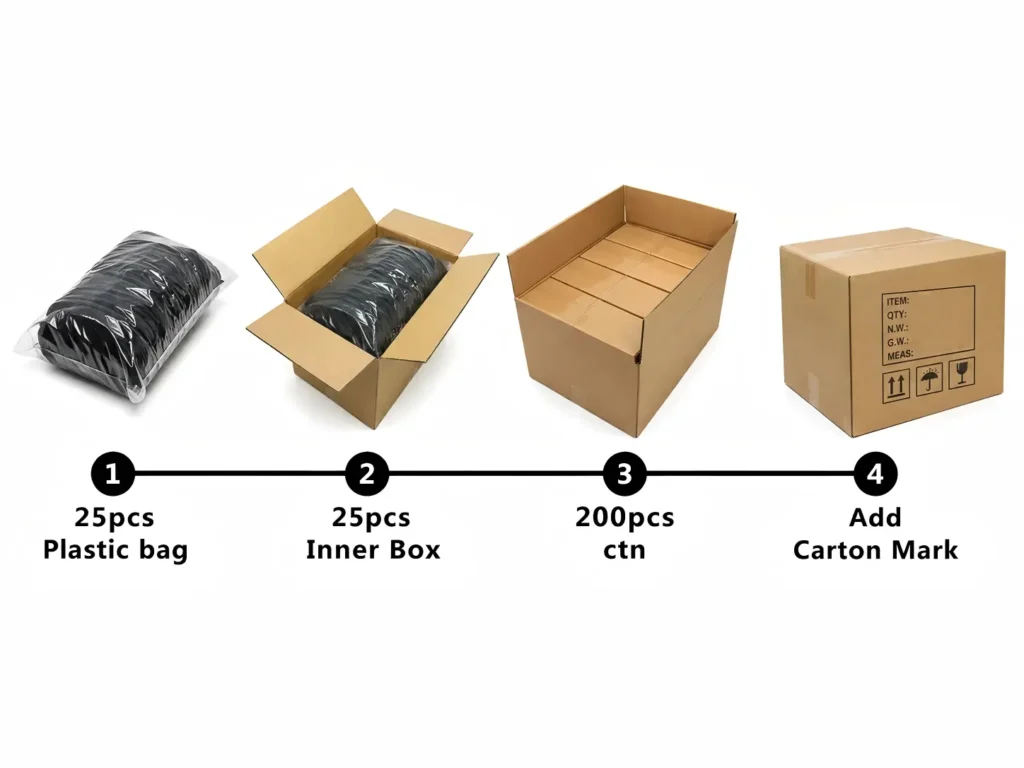
Discuss packaging and label requirements, shipment destination, expected shipping method, trade terms and documentation needs. Ask how approved specifications will be retained for repeat production; do not assume the same trim, dye lot or fabric is automatically available for future runs.
10. Use a weighted decision checklist
You can compare suppliers systematically without assuming that the cheapest quote represents the best value. The example below is a buyer evaluation framework, not a verified ranking of any supplier.
| Criterion | What to score | Suggested emphasis |
|---|---|---|
| Product and sample fit | Whether the approved sample matches the buyer brief | High |
| Quality and consistency | Defined inspections and evidence | High |
| Transparent total cost | All quote components and logistics assumptions | High |
| Communication | Timely, clear and documented answers | Medium |
| Capacity and timeline | Feasible schedule under realistic constraints | Medium |
| Certifications if required | Verified scope and expiry | According to buyer requirement |
Frequently asked questions
How do I know if a custom hat supplier is reliable?
Look for product-specific samples, an itemized quote, clear approvals and inspection processes, and verifiable business information. Assess its ability to execute your design rather than relying only on website promises.
Should I always choose a factory instead of a trading company?
Not necessarily. A direct factory, sourcing company or hybrid model can each be appropriate. What matters is who controls the manufacturing process, handles quality, takes responsibility for defects and can document the order.
Can I use the same logo for embroidery and patches?
The same artwork may require different preparation, stitch density, color constraints or edge treatment. Ask for an output-specific proof or sample rather than assuming identical appearance.
Does a low MOQ mean the total cost will be lower?
Not always. Unit pricing, setup fees, shipping and material availability may change with quantity and variant count. Compare a fully specified landed-cost estimate.
What should I send when asking for a quote?
Send the hat style, quantities by color, logo file, preferred materials, desired decoration, packing needs, delivery country and target arrival date. Include reference photos and note what can still change.
Compare suppliers by the product you actually need. A manufacturer suitable for cotton caps may not offer the same materials and trims for custom straw hats. Ask for relevant samples, band and logo options, and packing details. Our straw hat logo options guide explains specific questions to include in your RFQ.
Ready to compare your options?
Explore Max Hats company information and its certification information, then request a quote for the specifications you want to compare. Ask for current sample options and verification of any certification relevant to your order.